Why Choose Us
After storm-related water enters a home, the work has to be organized around evidence, not assumptions. mold remediation coral springs approaches storm cleanup with documentation first: photos as found, notes on where water entered, and a clear record of the rooms and materials affected before items are moved or surfaces are opened. That record helps separate storm damage from ordinary wear and gives the property owner a practical timeline of what was observed and what was done.
Because storm events in this area often involve both visible pooling and moisture you cannot see, the response includes water extraction, structural drying, and leak detection when the entry point is unclear. Extraction removes standing water so materials are not left saturated. Drying addresses what remains in flooring, baseboards, drywall, and framing. If staining or dampness suggests a hidden pathway, moisture readings and careful tracing help locate the source before a repair scope is written.
Every property and every storm is different, so the scope is written for the conditions at the address rather than copied from a template. If repairs involve building work, the permit route is confirmed with the City of Coral Springs Building Department for the specific scope and address. That step matters in a city where permits are handled through the local building department and requirements depend on what is being altered or repaired. The goal is straightforward: remove water, find where it came from, dry what can be dried, and document the path from damage to restoration.
Why Now
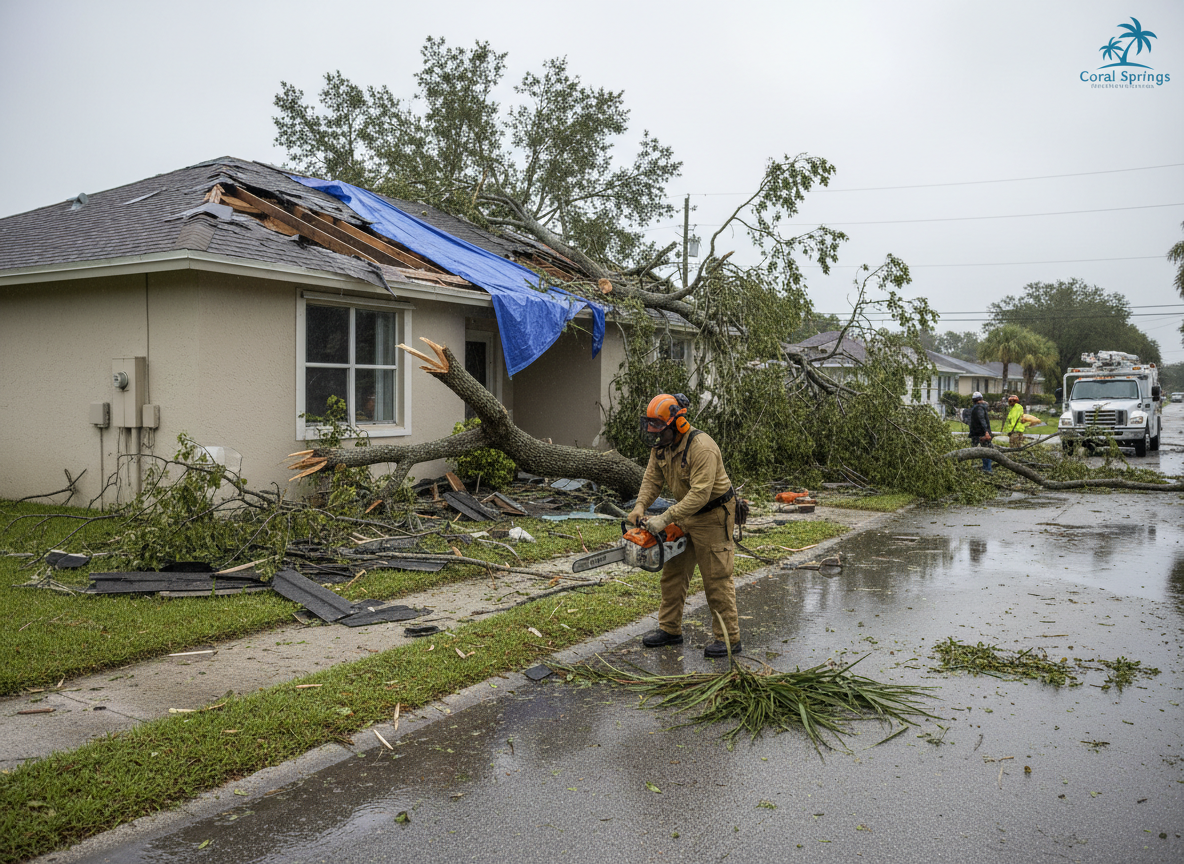
Storm water problems often look smaller than they are in the first few hours. Wind-driven rain can enter at a roof edge, around a window, through a door threshold, or along a wall penetration, then travel behind finishes before it shows up as a stain. In Coral Springs, rainfall is higher from April through September, and the inland setting sits within a canal and levee system managed in the region by the South Florida Water Management District. That combination of heavy seasonal rain, drainage patterns, and warm humid air means trapped moisture can linger if it is not found and dried.
Waiting until a room “looks dry” can leave damp material inside a wall or under flooring. Surface drying is not the same as structural drying. Water that remains in porous materials can affect adjacent rooms, create odor, and raise the risk of later microbial growth. The reason to act promptly is not about promises or shortcuts; it is about limiting how far water migrates after the storm passes. A careful inspection, moisture readings where appropriate, and a drying plan based on actual conditions help confirm whether the affected area is truly dry or only dry to the touch.
Storm timing also matters for documentation. Photos taken before cleanup, notes on the likely entry point, and a record of what was wet provide a clearer picture of storm-related damage. When homeowners in nearby communities such as Margate or Parkland face similar wind-driven rain, the same principle applies: identify the source, remove the water, and verify drying before closing up finishes.
Proof / How Storm Work Is Scoped
Storm cleanup should follow a process that can be explained and reviewed later. The first step is documenting conditions as found, including photos of standing water, wet materials, staining, and the areas where water appears to have entered. If it is safe to do so, stopping the source or limiting further intrusion protects the home while the damage is being recorded.
Next comes source and entry-point inspection. A ceiling stain does not always sit directly below the opening, and water that enters at a roof edge or window can move along framing before it becomes visible. Moisture readings help map where materials are wet, how far the moisture has traveled, and which areas need focused drying. This is especially important after a storm, when one event can create more than one wet area.
Extraction and drying are then verified against the mapped conditions. Water extraction removes pooled water, and drying equipment is used to address remaining moisture in the structure and contents as appropriate to the scope. The aim is to confirm progress, not guess. For homeowner records, it is also useful to distinguish storm damage from pre-existing wear. A clear scope notes what appears related to the storm event, what was observed during inspection, and what work is recommended based on the condition of the materials. If the project involves repairs that require approval, permit needs are confirmed with the City of Coral Springs Building Department for the address and scope.
Unique Scenario: One Storm, Two Water Problems
After a late-summer storm in Coral Springs, a homeowner notices water on the floor near a bedroom window. The carpet feels wet, the baseboard is swollen in one corner, and rain appears to have been driven against that side of the house. In the hallway on the opposite side of the home, there is no puddle, but a faint stain has spread along the lower part of an interior wall. The home did not flood from rising water; the issue began during wind-driven rain.
The job starts with entry-point documentation. Photos are taken of the bedroom floor, the window area, the wet baseboard, and the hallway stain before furniture is shifted or materials are removed. Notes capture when the water was noticed and which rooms were affected. This step matters because the two problem areas may share a storm timing but not the same cause.
In the bedroom, the immediate need is water extraction. Standing water and saturated soft materials are addressed first so moisture does not continue migrating into adjacent flooring or framing. Moisture readings are taken around the window, along the baseboard line, and into nearby flooring to define the drying zone.
In the hallway, the approach is different. The stain suggests moisture inside the wall, but opening the wall immediately is not the starting point. Leak detection begins with non-invasive steps: visual inspection, moisture meter readings, and tracing the pattern of dampness to understand whether the water traveled from the bedroom, entered near another opening, or followed a separate pathway. Only when readings and inspection justify it does selective opening of a wall become part of the scope.
Once the affected areas are mapped, drying is set up for the bedroom and any confirmed damp cavities. The repair scope is written after the source, moisture extent, and material condition are understood. This kind of split response keeps storm cleanup focused: document the entry point, extract what is wet, locate hidden moisture carefully, dry verified areas, and then define repairs based on evidence.
Entity Blocks
Water Extraction After a Storm
Water extraction after a storm is the step that removes standing water before it spreads deeper into a home. In a Coral Springs storm event, water may collect on hard flooring, soak carpet, or pool near a door or window where wind-driven rain entered. Extraction is not the end of the job; it is the starting point for limiting further absorption into drywall, baseboards, subfloors, and framing. The process works best when it follows documentation of the affected rooms and materials. Once pooled water is removed, the next question is how much moisture remains where it cannot be seen. That is why extraction is paired with inspection and moisture mapping rather than treated as a standalone fix. When storm water is handled quickly and carefully, the drying plan can be based on actual wet areas instead of guesswork.
Water Leak Detection
Water leak detection becomes important when storm damage leaves signs in one place but the source is somewhere else. A damp wall, bubbling paint, or a musty odor after rain may point to moisture traveling from a roof edge, window, or penetration rather than pooling on the floor. The process usually starts with non-invasive methods: visual inspection, moisture meter readings, and tracing the stain or damp pattern to the most likely entry path. This helps narrow the affected area before any material is removed. Opening a wall is justified when readings, access limits, or the pattern of damage show that the moisture cannot be confirmed or addressed from the surface. In storm-related cases, careful detection protects the home from unnecessary disruption while still finding the hidden water that needs to be dried. For broader help after water intrusion, see water damage restoration.
Storm Damage Restoration and Drying
Storm damage restoration and drying focus on returning affected materials to a stable, dry condition after the source and extent of water are understood. After extraction, drying addresses moisture that remains in building materials and enclosed spaces. Moisture readings can help show where drying is still needed and when conditions have improved in the areas that were mapped during inspection. Restoration decisions depend on what the water contacted, how long materials were wet, and whether they can be dried effectively. Storm cleanup may also involve documenting the difference between storm-related damage and older wear so the scope is clear. In a city that has experienced direct hurricane impacts, including Wilma in 2005, careful drying and documentation are practical parts of recovery. If storm moisture later contributes to microbial concerns, mold remediation may be relevant once the moisture source is addressed.
Wind-Driven Rain and Roof-Edge Entry
Wind-driven rain can push water into places that stay dry during an ordinary shower. During a storm, rain may enter at a roof edge, flashing transition, soffit area, window frame, or exterior penetration, then move along building materials before it appears inside. On a water-damage site, the focus is on the water entry and the resulting interior moisture, not on selling roof repair as a service. The useful steps are identifying where water likely entered, documenting the affected interior areas, checking for trapped moisture, and drying the materials that were impacted. In Coral Springs, where hurricane season runs through the fall and heavy rain is common from April through September, wind-driven rain can create both obvious and hidden wet areas. A careful inspection helps determine whether the issue is limited to surface wetting or includes moisture behind walls, ceilings, or trim that needs a defined drying scope.
FAQ and Next Step
What should I do first after storm water gets into my Coral Springs home?
Start with safety. Avoid electrical hazards and unsafe or unstable areas. If it is safe, take photos before moving items to record where water entered and what was affected. If you can safely limit the source, do that next. Then call to discuss the situation and arrange an inspection. For local service information, review the Coral Springs area page.
How do you find a leak I cannot see?
Finding a hidden leak usually begins with non-invasive steps. A visual inspection looks for staining, swelling, odor, and patterns that suggest where water traveled. Moisture meters and targeted readings can help trace dampness to an entry point or wet cavity. The goal is to understand the path of the water before removing materials. Opening a wall is justified when evidence shows moisture behind a surface, when access is needed to confirm the source, or when the area cannot be evaluated reliably without selective removal.
Is extraction different from drying?
Yes. Extraction removes standing water, such as puddles or saturated carpet water, so materials are not left holding excess liquid. Drying addresses moisture that remains after extraction, including dampness in flooring, drywall, baseboards, and structural materials. A space can look improved after extraction but still be wet inside porous materials. Moisture readings and a defined drying plan help confirm whether affected areas have reached an appropriate dry condition.
What will storm cleanup cost?
The cost depends on the conditions found at the property. Factors include how much water entered, which rooms and materials were affected, whether the moisture is limited to surfaces or trapped in wall or floor assemblies, how long the area was wet, and what documentation, extraction, drying, or repair scope is needed. Access, material type, and the complexity of finding the entry point can also affect the work involved. A clear inspection and written scope are the best way to understand the process for a specific home.
Do storm repairs in Coral Springs need a permit?
Permit requirements depend on the scope of work and the address. In Coral Springs, permits and inspections go through the City of Coral Springs Building Department. A permit is required to construct, enlarge, alter, repair, move, remove, or demolish a building or part of it, with specific exceptions. For storm-related repairs, confirm the permit route with the City of Coral Springs Building Department for your exact scope before work proceeds.
If storm water has entered your home and you need help sorting out extraction, leak detection, and drying, call mold remediation coral springs at (954) 481-0645. The team can talk through what you are seeing, document the affected areas, and outline the next steps based on the conditions at your Coral Springs property.