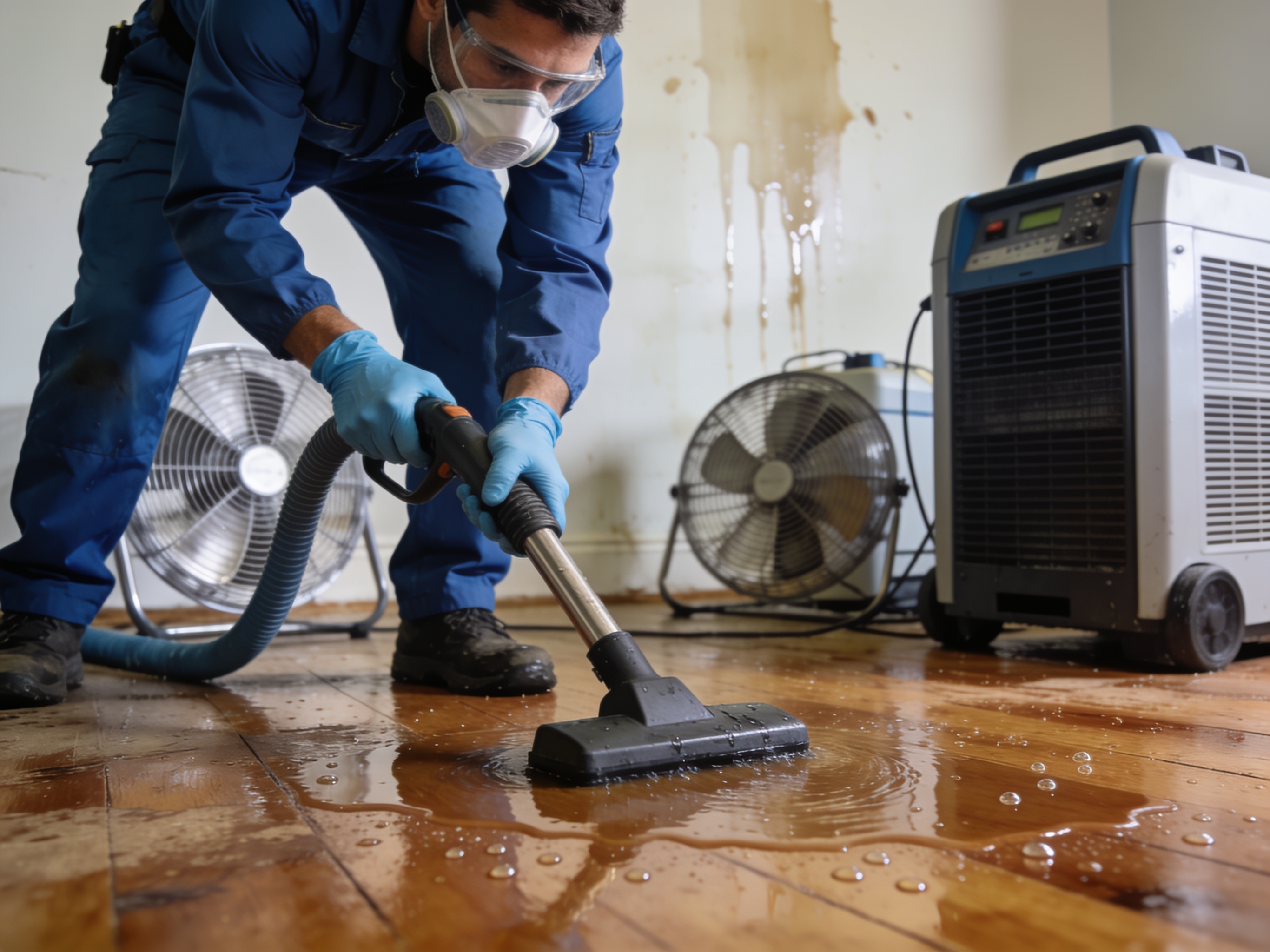
Water damage in Tamarac usually starts with one failed part: a supply line, a water heater, or an air conditioner drain that overflows. Tamarac has 74,134 residents in 31,422 households, and 76.2% of homes are owner-occupied, so the homeowner is usually the one deciding who dries the house and what gets repaired. The share of residents aged 65 and older, 25.9%, is the highest of the cities in this area, and an older owner may take longer to notice a slow leak behind a cabinet. Water that gets into a home rarely stays in one spot. It moves into drywall, baseboards, and flooring, so in a community of owner-occupied homes, the first call matters.
Water Damage in Tamarac: The Local Picture
Homes and growth
Tamarac is a large residential city in Broward County, and it is still growing. US Census Bureau QuickFacts shows 74,134 residents as of July 1, 2025, up 3.1% from the April 2020 base. Those residents live in 31,422 households, with an average of 2.31 persons per household, which is smaller than the households in neighbouring Coral Springs or Parkland. Most homes, 76.2%, are owner-occupied, so most water damage decisions rest with the owner rather than a landlord. Census figures describe the population and housing tenure, not the age of the housing stock, so this page makes no claim about when Tamarac homes were built. The median home value is among the most affordable in the set of nearby cities, but that is a qualitative point only.
Permits and authority
Water damage repairs in Tamarac fall under the Florida Building Code, which applies across the state. The city's building department handles permits for work inside Tamarac city limits. The state code sets the baseline, and the city applies it locally. Whether a particular repair needs a permit depends on the scope of the work: removing and replacing material, changing a fixture, or altering part of a structure can each lead to different requirements. Those rules are set by the city and the code, not by a contractor, so confirm with the Tamarac building department for your address before work starts. A written scope of work makes that conversation faster because the details are already on paper. Ask the building department about your property in writing before the scope is final.
Water systems and the housing mix
Tamarac's housing mix shapes how water damage is found: 76.2% of homes are owner-occupied, so the owner is usually the one who notices it. Most common causes are a burst or leaking pipe, a water heater that fails, an air conditioner condensate line that backs up, or a supply line to a dishwasher or refrigerator. In a city where most homes are owner-occupied, these failures are often found by the owner after water has already moved into drywall, baseboards, or flooring. Census data also shows 25.9% of residents are 65 or older, the highest share among the nearby cities in this set. An older household member who is less mobile, or a home left unattended for part of the year, may be slower to notice a slow leak behind a cabinet or under a floor.
Weather and water exposure (regional context)
The following is regional context from the Coral Springs climate record, not a rainfall measurement for Tamarac. In the Coral Springs area, rainfall is higher from April to September, and January and February are the driest months. The hurricane season runs June to November, with September the most likely month for a major storm. Tamarac sits within the same regional climate, so treat these patterns as broader area context. For planning, the practical window runs from April to September, with the storm months continuing into November. Neighbouring Coral Springs, which borders Tamarac to the north, had the eye of Hurricane Wilma pass directly over it in 2005. That history is a useful reminder that storm-driven water can reach any home in the area, not only the ones near the coast.
Services in Tamarac
Tamarac homeowners can get help with three types of water-related work. Each service has its own page with the full process.
Water damage restoration
Water damage restoration covers the work after water has entered a home. That includes extracting standing water, structural drying with air movers and dehumidification, moisture mapping to find wet material behind surfaces, and documentation for your records. Repairs follow once the structure is dry. With most Tamarac homes owner-occupied and many residents over 65, the scope in writing comes before any decision. The water damage restoration page explains the full process, including when material has to come out and what a repair covers after drying.
Storm damage
Storm damage in Tamarac usually means wind-driven rain entering through a damaged roof, window, or wall, fallen debris that opens a path for water, or water pushed in during a heavy storm. The storm damage service covers cleanup, drying, and the search for hidden water after the storm passes, including leak detection where water has moved behind walls or under floors. The storm damage page describes a documentation-first process that records the damage as it is found.
Mold remediation
Water that stays in a building for too long can lead to mold growth. Mold remediation removes the growth, uses containment and filtration during the work, and corrects the moisture source that allowed it to start. Drying is checked as part of the same process so the source does not keep feeding the problem. The mold remediation page covers what to expect before, during, and after the work.
Why Tamarac Homeowners Choose Us
Tamarac homeowners choose this business for a short drive south to the Coral Springs office and a written scope with jurisdiction confirmed per address. Our office is at 3308 N University Dr Ste 100, Coral Springs, FL 33065. We work from a written scope, which means you see what we found, what we will do, and what falls outside our work before any decision is made. Each scope is written for the specific rooms and materials affected, not a generic template.
Drying is not finished because the air feels dry. We take moisture readings on the affected materials and record them through the job, so you can see the change from the start of the work to the end. When the readings show the structure has dried, you have a record to hand to your insurer, a contractor, or your own files. We also explain what a repair covers after drying, so you know which items are being replaced and which are being dried in place.
Why Water Damage in Tamarac Should Not Wait
Wet materials do not wait for a convenient time. Drywall that soaks up water starts to swell and weaken, and baseboards and flooring can cup or lift when moisture stays underneath them. The longer water sits, the more likely it is that the damage moves from a visible surface into the layers you cannot see, such as wall cavities, subfloors, and the space behind cabinets. Those hidden areas are harder to dry and harder to trace later.
The regional rainy season in the Coral Springs area runs from April to September, when rainfall is higher. Hurricane season adds another window from June to November, with September the most likely month for a major storm. A storm that brings water into a home does not finish its work when the rain stops. Water that remains in the structure keeps moving and keeps feeding moisture into the materials around it.
With 31,422 households and most homes owner-occupied, many Tamarac owners carry both the cost and the delay of a water problem themselves. Acting early keeps more options open. The decision between drying a material and replacing it is easier to make while the material is still in place and before it has broken down. Waiting narrows those choices and can turn a drying job into a larger repair.
Frequently Asked Questions
How many people live in Tamarac?
US Census Bureau QuickFacts shows 74,134 residents as of July 1, 2025, up 3.1% from the April 2020 base. There are 31,422 households, and the owner-occupied rate for 2020 to 2024 is 76.2%. These are population and housing figures, not a measure of water risk on their own.
Does a water damage repair in Tamarac need a permit?
Whether a permit is needed depends on the scope of the repair and the rules that apply at your address. The Florida Building Code applies across the state, and the Tamarac building department is the right place to confirm the requirements for your property. A written scope of work helps you describe the job accurately when you make that call.
What weather pattern should Tamarac homeowners plan around?
This is regional context from the Coral Springs climate record. Rainfall is higher from April to September, the hurricane season runs June to November, and September is the most likely month for a major storm. These figures describe the broader area, not a rainfall measurement taken in Tamarac.
What affects the cost of water damage restoration in Tamarac?
Cost depends on factors, not a fixed figure. The main ones are how far the water spread, which materials are wet, such as drywall, flooring, cabinets, or insulation, how long the water sat before extraction, whether mold has started, how easily the wet area can be reached, and whether the repair needs a permit. Each factor changes the scope of the work, which is why the written scope comes before any decision.
What happens when I call, and how do you know the drying is finished?
Call (954) 481-0645. We ask where the water came from, whether it is still running, and which rooms are affected. We then explain the next steps and what the scope will include. Drying is checked with moisture readings taken on the affected materials and recorded during the job, so the finish point is based on measurements rather than how the room looks.
Do you work in Tamarac?
Yes. Tamarac is one of the areas this business works in, served from the Coral Springs office at 3308 N University Dr Ste 100. Calling (954) 481-0645 is the way to start a conversation about a Tamarac property.
Call (954) 481-0645 for Water Damage Help in Tamarac
If water is in your Tamarac home now, call (954) 481-0645. You can also visit our contact page for the full details on how to reach us. The first step is to tell us where the water is and which rooms are affected, and we will explain the next steps, including what the written scope will cover for your property.