Sunrise is a Broward County city of 98,846 residents, and most water damage here starts the same way: a pipe, appliance, air conditioner or storm lets water into a home, and the wet drywall, flooring and subfloor keep holding moisture long after the surface looks dry. Homeowners searching for water damage Sunrise help need three things: the source stopped, the structure dried properly, and a clear record of what was affected. Our company works from a Coral Springs office a short drive away, and this page explains what that means for Sunrise homes.
Water Damage in Sunrise: The Local Picture
Sunrise Homes and Growth
Census QuickFacts estimates Sunrise's population at 98,846 as of July 1, 2025, a rise of 1.5 percent since the April 2020 base. The city has 35,979 households, with an average of 2.70 persons per household, and 68.8 percent of its housing is owner-occupied. That ownership share means many people facing a leak are the ones who must make repair decisions, schedule the work and manage the rebuild themselves. Ownership also means contractor choices and timing often rest with one household. Sunrise also has a sizeable older population, with 19.5 percent of residents aged 65 or older, so a water event can disrupt people who need their home to stay safe and easy to move through during repairs. Home values in the city are substantial, so a damaged house holds real value worth protecting.
Sunrise's Permit Route
Sunrise's Community Development Department, through its Building Division, sets the permit path by type of work. Plans for demolition, additions, alterations or new construction are first approved through Broward County ePermits. Exterior-altering work then goes to the City Community Development Department, so the route can have two stages. Re-roofing, interior renovations, fencing, interior plumbing or electrical repairs and air conditioning changeouts may be submitted directly to the Building Division. A building permit is issued only after approval by all appropriate disciplines, which can include structural, electrical, plumbing, mechanical and fire. For a homeowner dealing with water damage, the practical point is that the scope of the repair decides the route. Each stage depends on the scope of the work, so the sequence is worth checking before anything starts. Confirming it early keeps a drying job from stalling while paperwork catches up.
Water Sources in Sunrise Homes
68.8 percent of Sunrise homes are owner-occupied, so the household usually has to find the source. Most water damage inside a home comes from a short list of sources: a supply line that fails inside a wall, a drain that backs up, a water heater that leaks, an air conditioner whose condensate line clogs, or an appliance hose that splits. In Sunrise homes these sources matter because water often travels before it shows. It can run down a wall cavity, under a floor covering or behind a cabinet, so the visible stain is usually just the edge of a larger wet area. Air conditioners in South Florida run for much of the year, which makes condensate overflow a recurring risk. Finding the true source matters, because drying a wall while a supply line is still leaking only restarts the problem.
Rain, Storms and Regional Water Exposure
Sunrise shares the South Florida climate of the wider Broward region, and regional climate data is the most useful guide to its water exposure. Figures summarised for the Coral Springs area show rainfall higher from April through September, with January and February the driest months. Hurricane season runs from June through November, and September is the most likely month for a major storm. Rainfall and hurricane season therefore overlap from June through September. These are regional patterns, not measurements taken in Sunrise. What they mean for a home is that wet-season rain and wind-driven storm water can enter through roofs, windows and doors, and humidity stays high enough to slow drying. Planning for the wet season as the normal condition, rather than the exception, is the sensible approach.
Services in Sunrise
Sunrise homeowners usually arrive with one of three problems. Each has its own service page, and this section introduces them.
Water Damage Restoration
For a burst pipe, a failed water heater or an air conditioning leak in a Sunrise home, water damage restoration covers water extraction, structural drying, moisture mapping and the decisions about which drywall, flooring or baseboards must come out. Moisture mapping shows where water has moved inside walls and under floors, so the scope reflects the real wet area rather than the visible stain. Repair after drying is part of the same plan, so the path from wet to rebuilt stays in one place, with a written scope setting out each step.
Storm Damage
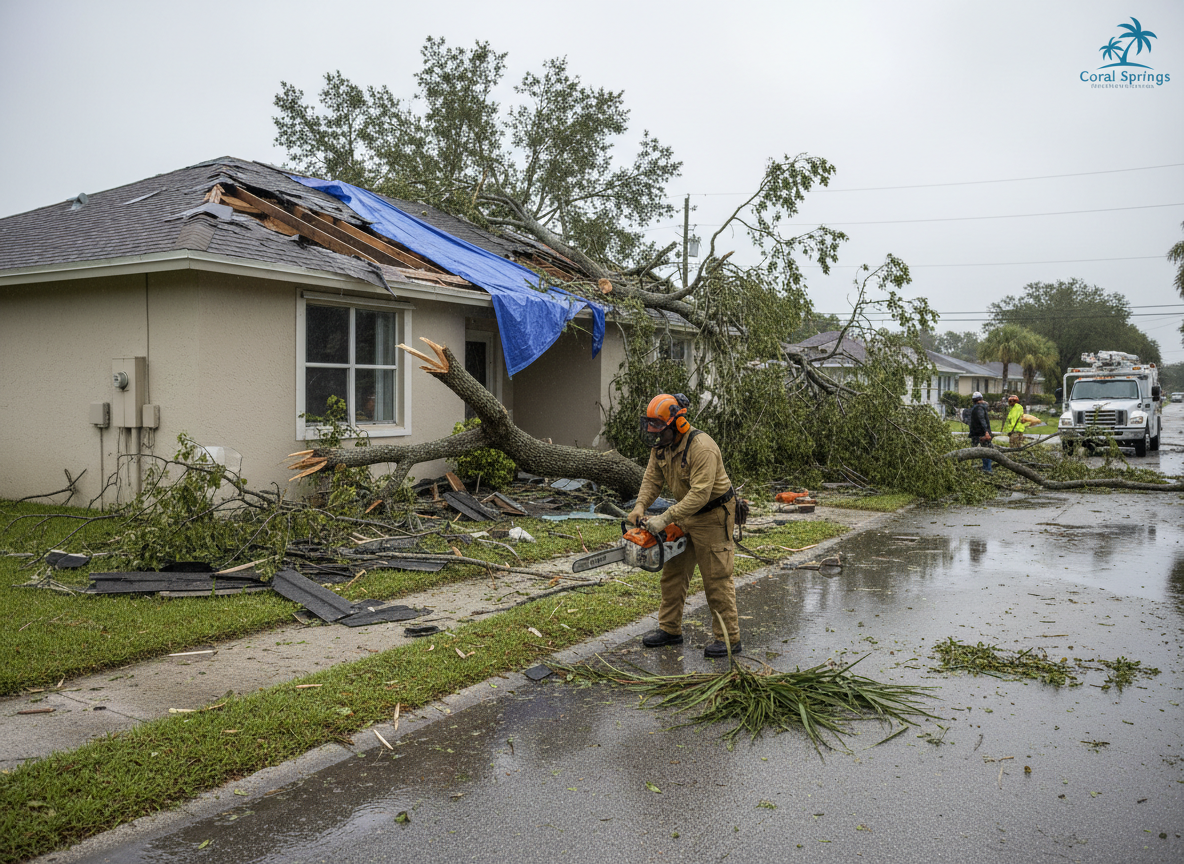
After wind-driven rain, a fallen tree or heavy water around the home, the storm damage service handles water entry, extraction and hidden leak detection. The process starts with photographic documentation of the damage as found, followed by stopping the source, extracting water and drying the structure. Leak detection looks for water that has entered behind finishes or below the surface, since storm water often keeps moving after the rain stops. Each step is explained before it starts, so the work stays easy to follow.
Mold Remediation
When water sits in walls or flooring long enough, mold can follow. Mold remediation covers inspection, containment, filtration, antimicrobial treatment and correcting the moisture source, because removing mold without stopping the water usually fails. Containment keeps the affected area separated from the rest of the home while the work is done, and filtration helps clean the air during removal. Inspection comes first, so the scope reflects where mold is actually present rather than where it is easiest to see. Work is checked before the job is closed.
Why Sunrise Homeowners Choose Us
Sunrise homeowners choose this company because the two-step permit route is handled for their address, each job starts with a written scope, and drying is verified by readings. Our office is at 3308 N University Dr Ste 100, Coral Springs, FL 33065, a short drive from homes in Sunrise. You can reach us by phone at (954) 481-0645. Each job begins with a written scope that describes the affected areas, the work planned and the steps that follow, so you know what is happening before it starts. Drying is then checked with moisture readings rather than by appearance alone. Readings are taken in the affected materials and tracked as drying progresses, and the job is not signed off until the materials read dry. That approach ties decisions about rebuilding to measured results rather than to a surface that only looks finished.
Why Water Damage in Sunrise Should Not Wait
Water left in drywall, insulation, carpet pad or subfloor does not dry on its own in South Florida humidity. During the April through September rainfall period, indoor air holds more moisture, and materials that are only partly wet can stay damp long enough to support mold growth and wood damage. Delay also makes the job bigger. A wall that could have been dried in place early on may need to come out once moisture has sat in it, and flooring that could have been saved can cup and lift. Waiting also gives moisture more time to reach materials that were dry at first, so the area of work tends to grow. With 68.8 percent of Sunrise homes owner-occupied, many people manage their own repairs, and early action keeps the choices simple. If a repair touches plumbing, air conditioning or interior electrical work, confirming the Sunrise permit route at the start avoids rework later. The wet season and hurricane season overlap for several months each year, and that overlap is the strongest reason to deal with water as soon as it is found.
Frequently Asked Questions About Water Damage in Sunrise
Do I need a permit to repair water damage in Sunrise, Florida?
It depends on the work. Re-roofing, fencing, interior renovations, interior plumbing or electrical repairs and air conditioning changeouts can be submitted directly to the City of Sunrise Building Division. Demolition, additions, alterations and new construction are first approved through Broward County ePermits, and exterior-altering work then goes to the City Community Development Department. Confirm the route with the Building Division before work begins, rather than assuming a rule from another city applies.
How does the rainy season affect a Sunrise home?
Regional rainfall is higher from April through September, and hurricane season runs from June through November. These are regional patterns, not Sunrise measurements. During the wet months, check ceilings, closets, the area under sinks and the base of walls after heavy rain. New staining, soft drywall or a musty smell is a reason to call promptly, since wet materials rarely dry properly without help.
What affects the cost of water damage restoration in Sunrise?
The cost depends on several factors, and this page does not quote figures. The main drivers are how much water got in and how long it sat, which materials are affected (drywall, flooring, subfloor, cabinetry or insulation), whether the source has been stopped, how easily the affected area can be reached, whether mold is present, and whether the repair needs a permit. A written scope explains which of these apply to a specific home before work starts.
What happens when I call about water damage in Sunrise?
Call (954) 481-0645 and describe where the water came from, which rooms are affected and whether it is still running. The next steps are then explained: stopping the source if possible, extracting standing water, setting up drying and tracking moisture until the materials are dry. Ask questions at each stage so you understand what is being done and why.
How is drying verified?
Drying is checked with moisture readings taken in the affected materials, not by looking at the surface. Readings are recorded as the job progresses, so you can see the trend from wet to dry. Materials that do not reach a dry reading may need to come out, and that decision is explained before it is made.
Is the permit process in Sunrise the same as in Coral Springs?
No. Each city runs its own building authority, forms and permit route. Sunrise sends demolition, additions, alterations and new construction through Broward County ePermits first, and handles interior plumbing and air conditioning changeouts directly through its Building Division. Coral Springs runs its own Building Department and rules, so the two cities should not be treated as one.
Get Help With Water Damage in Sunrise
If water has reached your Sunrise home, call (954) 481-0645 to describe what happened and where the water is. Note the affected rooms and whether the water is still running. You can also find our address and details on the contact page. Acting early limits the damage, so the sooner you call, the more options you usually have. The first steps are explained before work begins.