Why Choose Us
Water damage is rarely limited to the spot you can see. A ceiling stain, warped baseboard, or damp section of flooring often points to moisture that has traveled behind drywall, under cabinets, or into adjacent rooms. That is why the first step is a full-property moisture inspection before any scope is set. The goal is to understand how far the water moved, which materials can be dried, and which areas may need removal or repair.
Drying is not treated as a guess. Structural drying should be verified by readings, not by appearance alone. Surfaces can feel dry while moisture remains trapped in framing, subfloors, or insulation. A measured approach helps confirm progress and reduces the chance that hidden dampness is left behind.
Water repair decisions should also be honest. Some materials can be dried and restored in place. Others, such as swollen flooring, saturated drywall, or damaged baseboards, may need to be removed and replaced to make the repair dependable. When work requires a permit for a Coral Springs address, the permit route is confirmed with the City of Coral Springs Building Department before the scope moves forward. The focus is clear communication, documented findings, and a plan that matches what the property actually needs.
Why Now
Standing water and trapped moisture cause problems fast, especially in South Florida humidity. In Coral Springs, rainfall is typically higher from April through September, and wet materials can hold moisture longer when indoor air stays humid. Drywall can soften, swell, and lose strength. Flooring may cup, separate, or trap water underneath. Cabinets can absorb moisture at the base, and framing can stay damp in places that are hard to see without proper inspection. A surface that feels dry can still hold moisture in framing or insulation, so visible dryness is not enough.
The longer water sits, the wider the affected area can become. During the April through September wet season, trapped moisture can migrate into wall cavities and under flooring, reaching areas never directly soaked. It can wick up wall cavities, move along base plates, and spread beneath finished surfaces. What starts as a single wet room may turn into a larger drying and repair project if the source is not stopped and the structure is not dried thoroughly.
Mold is another concern when moisture remains. Damp building materials can create conditions where microbial growth becomes more likely, which is why drying and moisture control matter as much as cleanup. If you are dealing with that concern, see /services/mold-remediation for details on remediation. This page focuses on water damage restoration and the repair work that may follow once drying is complete.
Proof / How Restoration Is Scoped and Verified
A reliable restoration plan follows a clear sequence. The process starts by stopping the source of water, whether it is a plumbing failure, appliance line, or another entry point. Once the source is controlled, water extraction removes standing water so drying can begin.
Next comes moisture mapping. Readings help identify where water traveled, including behind walls, under flooring, and into nearby rooms. From there, a drying plan is built around the materials involved and the areas affected. Equipment placement, material condition, and access all shape the plan, and progress is checked with follow-up readings rather than assumptions.
Documentation matters throughout the job. Photos taken as conditions are found, notes on affected materials, and a written scope help explain what was done and why. For Coral Springs properties, permit needs are reviewed based on the type of repair involved. Work that constructs, alters, or repairs building components may require a permit through the City of Coral Springs Building Department, and certain change-outs, including water heaters and air conditioning equipment, always require a permit. Stating the permit route early helps avoid confusion later.
Unique Scenario
A common situation in a Coral Springs home involves a water heater or supply-line failure that is not noticed right away. The leak may begin in a utility area, laundry space, garage corner, or closet. At first, the damage seems limited to that room. There may be a wet floor, damp drywall near the base, or a small pool of water around the fixture. But once the water has time to move, it can travel under flooring and into a second room before anyone realizes the full extent of the problem.
This is where the visible room often understates the job. Flooring systems can allow water to migrate out of sight, especially when materials are layered or seams create pathways. Baseboards and lower wall sections in the next room may look only slightly affected, yet moisture readings can show that water has spread farther than expected. Cabinets, toe-kicks, and transitions between rooms can also hide damp areas.
An honest scope breaks the work into clear parts. First, stop the source so no new water enters the structure. If the failure involves a fixture connection or supply component, that issue has to be addressed before drying can succeed. Second, extract standing water and remove materials that cannot be dried safely. Third, map moisture and run a drying plan that covers both rooms, not just the one where the leak was discovered. Finally, complete water repair after drying is verified by readings.
Repair may include replacing sections of drywall, resetting or replacing baseboards, and addressing flooring that has warped or separated. In some cases, part of the material can be saved. In others, removal is the correct scope because trapped moisture or material damage makes restoration unreliable. The key point is that the repair plan should follow the evidence, not the first impression.
Entity Blocks
Water Extraction and Structural Drying
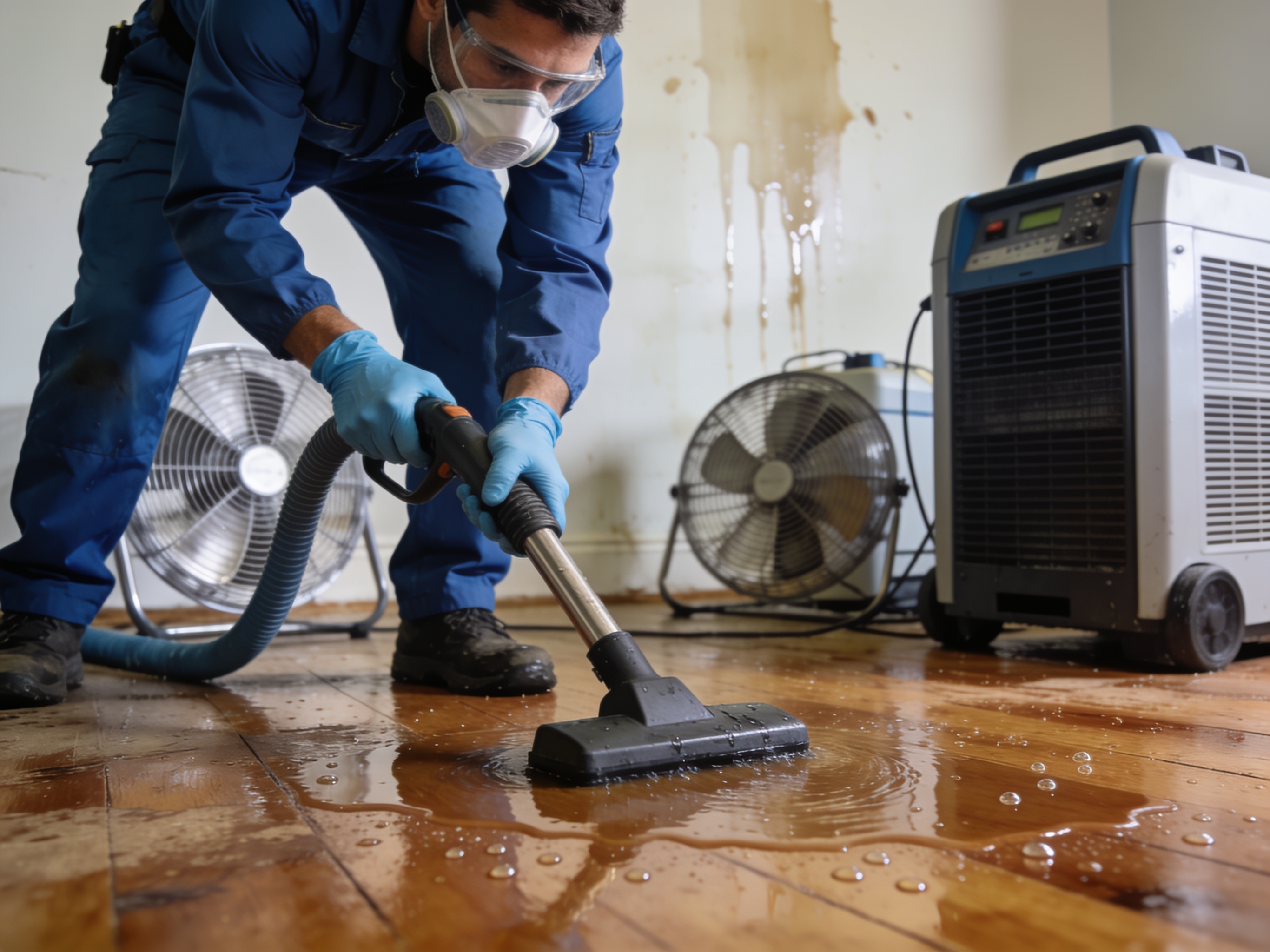
- Water extraction: Standing water is removed from floors and affected areas before drying equipment is placed, so the equipment can work on moisture within materials instead of pooled water. Removing bulk water first also shortens the drying load on flooring and wall bases and limits further spread into adjoining rooms.
- Moisture mapping: Readings help locate wet materials behind surfaces, under flooring, and around transitions where water often travels unnoticed.
- Structural drying: Air movement and dehumidification are planned around the materials involved, with progress checked by readings rather than touch alone. Drying is checked at the wettest points rather than the driest so no hidden pocket is overlooked.
- Verification: Drying continues until affected areas reach appropriate conditions for the next step, whether that is repair, removal, or further evaluation, and those conditions are confirmed before work moves forward.
Water Repair After Drying
- Drywall decisions: Wet drywall may be dried in limited cases, but sections that have softened, swelled, or held moisture too long often need removal and replacement. A repair is only closed up after readings confirm the material behind it is dry.
- Flooring outcomes: Some flooring can be restored, while cupped, separated, or moisture-trapped materials may require replacement. The choice depends on whether the material and the layer beneath it can return to a stable condition.
- Baseboards and trim: Baseboards often absorb water at the lower edge and may need removal, drying of the wall area, and reinstalling or replacing. Baseboards and cabinet bases are assessed separately from the wall and floor they touch, since each can hold moisture differently.
- Scope clarity: Water repair is planned after drying results are known, so the work matches each material's condition instead of relying on assumptions.
Leak-Source Repair Context
- Source control first: If the plumbing, fixture, or equipment source is not fixed, drying efforts can fail because new moisture keeps entering the same area. An unverified source can restart the damage cycle after a room is dried, sending moisture back into materials that were already addressed.
- Common sources: Supply lines, water heaters, appliance connections, and AC-related water issues can all lead to interior damage that needs both drying and repair.
- Repair coordination: This page covers water repair after damage occurs, but finding the exact hidden source can require a different diagnostic focus. Documenting the source location helps the repair record show what was found and what was corrected.
- Where to learn more: For leak detection detail that may follow storm-related water entry or hidden moisture paths, see /services/storm-damage.
Moisture Mapping and Documentation
- Targeted readings: Moisture mapping uses targeted readings to confirm where water moved, including areas that look fine on the surface but still hold dampness inside walls, floors, or framing.
- Room-to-room tracking: Readings are especially useful when water has traveled under flooring or into a second room beyond the original failure point. Readings are re-taken at the same marked points so progress is comparable from one check to the next.
- Photo records: Photos taken as conditions are found, along with notes on affected materials, create a clear record of the damage and the scope for the property.
- Written scope: A documented plan explains extraction, drying, repair, and any permit considerations for the Coral Springs address involved. The written scope separates extraction, drying, and repair so each step can be checked on its own before the next begins.
FAQ + Next Step
What does water damage restoration include, step by step?
Water damage restoration begins with stopping the source of water and assessing the area. Next steps include water extraction, moisture mapping, and a structural drying plan based on the materials affected. Once drying is verified by readings, the scope can move into water repair, which may include drywall, flooring, baseboards, or other damaged components. Documentation, including photos and a written scope, helps clarify what was found and the work needed.
How long does drying take?
Drying time depends on how much water entered the property, how long it sat, which materials were affected, and airflow through the space. Dense materials, layered flooring, wall cavities, and humid conditions can all extend the process. Because of those variables, drying should be verified by readings rather than a preset timeline. The right question is not how many days it should take, but whether affected materials have reached appropriate conditions before repairs begin.
Do I need a permit for water damage repairs in Coral Springs?
It depends on the type of work. In Coral Springs, permits are handled through the City of Coral Springs Building Department. A permit is generally required to construct, enlarge, alter, repair, move, remove, or demolish building components, and some work qualifies as limited maintenance. Certain change-outs always require a permit, including water heater and air conditioning change-outs. For a Coral Springs address, confirm the permit route with the City before repair work proceeds.
What will restoration cost?
The scope is shaped by practical factors, not a one-size number. Considerations include how much water entered the property, how long it was present, which materials were affected, whether water reached multiple rooms, and how much removal or repair is needed after drying. Access to damaged areas, the type of flooring or wall assembly, and the condition of cabinets or trim can also affect the plan. A clear inspection, moisture mapping, photos, and a written scope provide the most useful basis for understanding the work involved.
Can wet drywall and flooring always be saved?
No. Some materials can be dried and restored, but others are better removed. Drywall that has softened, swollen, or remained wet too long may not return to a stable condition. Flooring can also be difficult to save when water is trapped underneath, when materials have cupped or separated, or when moisture remains in the subfloor. The right decision depends on readings, material condition, and whether keeping the material would leave hidden moisture or an unreliable repair behind.
If you need help with water damage restoration, water extraction, structural drying, or water repair in Coral Springs, call (954) 481-0645. mold remediation coral springs is located at 3308 N University Dr Ste 100, Coral Springs, FL 33065. A clear next step is a conversation about what happened, which areas are affected, and what the property needs now.