Why Choose Us
A measured approach to mold remediation keeps the focus on the conditions that allow growth to continue, not just the areas that look affected. Containment comes first because disturbing impacted materials before the work area is controlled can spread particles to other parts of the home. By setting containment before any removal begins, the scope stays defined, the work area remains controlled, and the removal process can be carried out with fewer surprises. This step is not an extra; it is the foundation that makes the rest of the work more predictable.
Moisture-source correction is the step remediation fails without. If the source of water is still active or has not been fully addressed, new growth can return even after visible material is removed. That is why the source must be identified and corrected before or alongside removal, whether the issue began with water damage or a storm-related entry point. Removal, rather than surface treatment, is the focus when materials are unsalvageable. Porous materials that have been affected may not respond to surface cleaning alone, and a plan based only on appearance can leave the underlying problem in place.
Every scoped plan should be clear in writing about what will be removed, what will be contained, and what must be addressed to help prevent recurrence. A written scope gives you a practical understanding of boundaries, sequencing, and the steps needed to move from assessment to completion. When the plan is documented this way, decisions are based on findings rather than assumptions, and the work stays aligned with the conditions found in the home.
Why Now
Growth does not always wait for a large flood. After undried water, mold can develop in hidden spaces such as wall cavities or under flooring, often out of sight until it has spread beyond the original wet area. In Coral Springs, long humid periods and the April through September rainfall season can keep indoor materials damp longer, especially when moisture is trapped behind finishes or inside enclosed spaces. When that moisture remains, conditions can support growth even if the surface looks dry.
Disturbing affected materials without containment can spread particles to other areas of the home. Opening a wall, pulling up flooring, or moving stored items in a damp space can release material into the air before the scope is defined. That is one reason a measured, contained approach matters more than quick surface action.
Bleach and paint may change the appearance of a surface for a time, but they do not remove mold from porous materials or correct the moisture that allowed it to grow. Surface treatment can make a problem seem smaller than it is, while hidden growth continues behind the finish. In a climate with sustained humidity and seasonal rain, that delay can give growth more time to spread. The longer moisture remains in wall cavities, under flooring, or around an AC closet, the more important a scoped approach becomes. Acting on moisture and material conditions, rather than appearance alone, helps keep the work focused on the source of the problem.
Proof / How Remediation Is Scoped and Verified
A proper scope starts with inspection and assessment context. The goal is to understand where moisture is present, what materials are affected, and how far the impact extends beyond what is visible. Moisture readings help identify affected and at-risk areas, not just the spots that are visibly discolored. Readings taken in nearby cavities, flooring transitions, and enclosed spaces provide a clearer picture of boundaries, so the plan is based on conditions rather than guesswork.
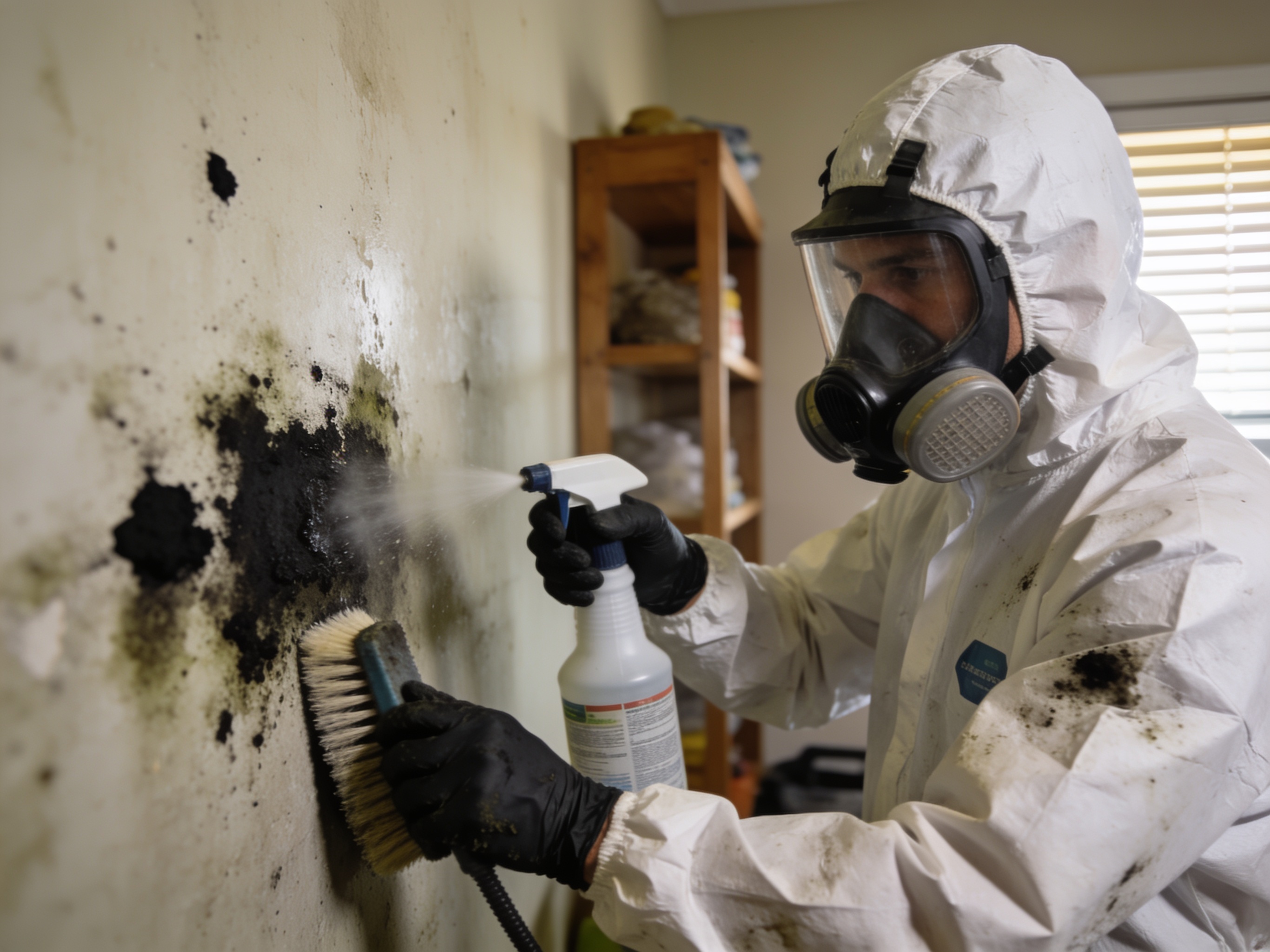
From there, containment is set up to define the work area before materials are disturbed. Containment helps limit the spread of impacted material during removal and keeps the scope focused on the areas identified in the assessment. HEPA filtration is used during removal to support controlled work conditions while unsalvageable materials are taken out. The size and setup of containment are guided by the findings, so the process matches the scope of the affected area.
Unsalvageable porous materials are removed when findings show that surface treatment is not enough. Salvageability is determined by material type and moisture findings, not by appearance alone. After removal and any needed drying, drying verification focuses on moisture readings to confirm affected areas have been brought to an appropriate condition for the work that was performed. This step helps confirm that the scope addressed the materials and moisture identified during assessment. No assumptions are made from appearance alone, and each step is tied back to the conditions found in the home.
Unique Scenario
A common scenario for Coral Springs homes is mold found behind a bathroom or AC closet weeks after a slow condensate leak. The issue may not be obvious at first because the leak is small, the space is enclosed, and moisture can collect behind finishes before any surface change is noticed. A step-by-step approach helps keep the work focused on assessment, containment, source correction, removal, and verification.
First, an assessment is made to locate visible and hidden growth. Moisture readings are taken in the closet, adjacent wall cavities, nearby flooring, and any transition areas where moisture may have traveled. This step defines the likely boundaries of the affected area and identifies where materials may be at risk, even if they do not show clear surface signs.
Second, containment is set up for the work area before any disturbance of affected materials. HEPA filtration is placed to support controlled conditions during removal. Establishing containment early helps keep the work limited to the scoped area and reduces the chance of spreading impacted material while access is created.
Third, the moisture source is addressed in sequence with the leak work. If the condensate line needs correction, that source-fix sequencing must be planned alongside remediation. Removal alone will not hold if the leak continues, so the timing of repairs and remediation steps needs to be coordinated around the findings.
Fourth, unsalvageable materials are removed within the contained area. Access is limited to what the scope requires, and decisions about removal are based on material condition and moisture findings rather than appearance alone.
Fifth, affected areas are dried to appropriate readings, and verification of moisture is used to confirm the scope conditions before containment is taken down. This verification step helps confirm that the work addressed both the impacted materials and the moisture that allowed growth to develop. By following this sequence, the response stays focused on source control, removal, and verification without assuming more than what is found.
Entity Blocks
Mold Inspection and Moisture Assessment
Mold inspection and moisture assessment is not a stand-alone service page on this site; it is a section of this work. The purpose is to locate visible growth, identify likely moisture pathways, and use moisture readings to understand what materials are affected. Readings taken in wall cavities, flooring transitions, and enclosed areas help define the scope beyond what can be seen on the surface. This assessment also sets scope boundaries, including where containment should be placed and what materials may need removal. Findings guide sequencing with source repairs, so the moisture condition is addressed in the right order. The goal is a clear, findings-based plan that supports the next steps of remediation without guessing at the size or cause of the problem.
Containment and HEPA Filtration
Containment and HEPA filtration are used to create a controlled work area before affected materials are disturbed. Once the scope is defined, containment helps separate the work zone from other parts of the home so removal can be carried out within clear boundaries. HEPA filtration is used during removal to support controlled conditions while impacted materials are handled. These measures are process steps, not cosmetic ones. The setup is scaled to the scope identified during assessment, which may mean a smaller contained area for a limited cavity or a larger setup when more materials are involved. Containment stays in place for the duration of work that could disturb unsalvageable materials, and it is removed only after the scoped work and related verification steps are complete.
Mold Removal and Remediation
Mold removal and remediation focus on taking out unsalvageable porous materials and addressing the conditions that allowed growth to develop. Not every material responds to surface cleaning, so salvageability is decided by findings from the assessment, including material type and moisture readings. Removal is carried out within containment, with access limited to the areas defined in the written scope. That scope explains what will be removed, what will remain, and how the work is sequenced with moisture-source correction. If the source is not corrected, removal alone may not hold, which is why the plan treats source control as part of remediation. The work is considered complete only when the scoped removal and moisture-related steps have been addressed according to the findings.
Moisture-Source Correction and Prevention
Moisture-source correction is the step that helps keep remediation from becoming a repeat problem. An uncorrected source can include a slow condensate leak, a plumbing issue, wind-driven entry, or another condition identified during assessment. These sources are treated as assessment findings, not assumptions, and they guide how the work is sequenced. In some cases, correction may need to be coordinated with repairs outside the contained removal area. Where storm-related entry is part of the findings, sequencing may also relate to Storm Damage. Prevention in practice means correcting the source, completing the scoped removal, and re-checking moisture after removal to confirm conditions have improved. Readings taken at the corrected source location after removal, before finishes close, help confirm that spot has reached an appropriate condition. It is a process based on findings and verification, not a product promise.
FAQ + Next Step
What is the average cost of mold remediation in Florida?
There is no single figure that applies across Florida. The factors that drive scope include the extent and location of growth, how much porous material must be removed, accessibility of the area, the size of containment needed, the complexity of moisture-source correction, and the level of moisture verification required. Process transparency is the reliable way to understand scope.
What does mold remediation typically cost?
For a specific home, scope is driven by its own set of factors. These include the boundaries of affected material, whether removal is limited to a small cavity or a larger area, access constraints, sequencing with source repairs, containment needs, and post-removal moisture verification. Any discussion of scope should be based off of findings from an assessment, with factors explained rather than figures provided.
What kills mold permanently in a house?
No spray or coating kills mold permanently on its own. Permanent control requires removal of mold growth from unsalvageable materials and correcting the moisture source that allowed it to grow. Without moisture-source correction, conditions for growth can return, which is why removal and source control go together.
Is mold remediation covered by insurance in Florida?
Whether mold remediation is covered depends entirely on the cause of loss and the specific policy. Some policies may consider certain water events, while others may not. There is no blanket answer for every reader, so it is best to check directly with your own insurer about your policy for the exact circumstances.
Next Step
If you suspect mold after a leak in your Coral Springs home, the starting point is a scoped assessment focused on moisture and affected materials. For your situation, call mold remediation coral springs at (954) 481-0645. This page serves Coral Springs, FL and can be considered alongside Water Damage Restoration, Storm Damage, and the Coral Springs city page for location context.