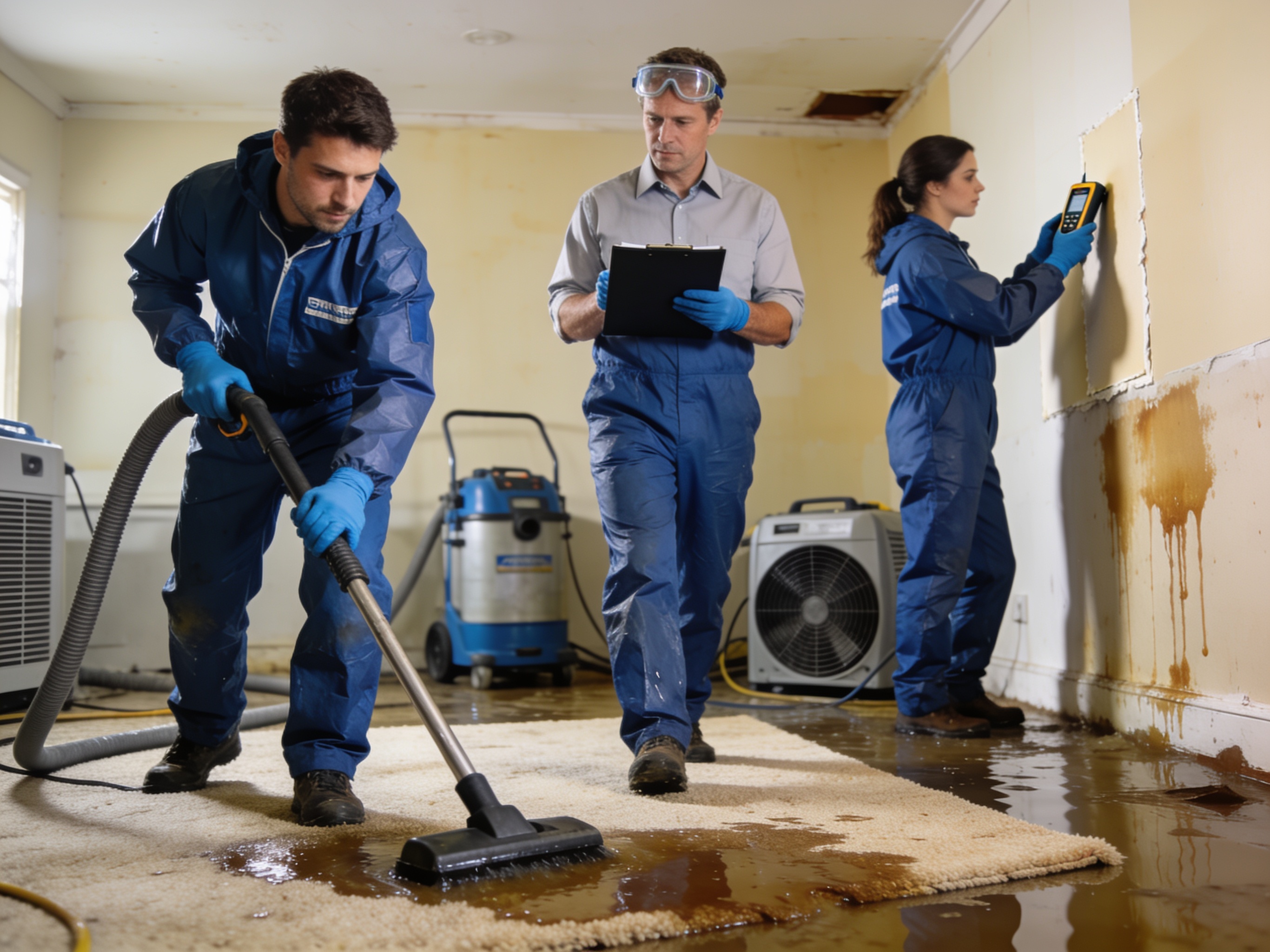
Searching for water damage Boca Raton help usually means a home is wet right now. Boca Raton had an estimated 101,582 residents in July 2025, and the water in a home can spread into drywall, flooring and cabinet bases faster than most owners expect. The city counts 41,450 households, and 65.7% of its housing is owner-occupied, so most calls come from homeowners who make repair decisions themselves. When a supply line bursts or rain gets in during the wet season, the first step is to understand where the water went. This page explains the local picture, what to check first, and how our team in Coral Springs approaches each job.
Water Damage in Boca Raton: The Local Picture
Homes and growth
Boca Raton had an estimated 101,582 residents on July 1, 2025, a rise of 4.2% from the April 2020 base used by the US Census. The city counts 41,450 households, and 65.7% of its housing is owner-occupied, so the person calling about a leak is usually the homeowner who will decide on repairs. Residents aged 65 and older make up 24.6% of the population. That share matters when a household needs help moving belongings, clearing rooms or staying out of the way while drying equipment runs. The Census also places the city's median owner-occupied home value among the highest in our service area. Higher-value homes often carry hardwood, tile, stone and custom cabinetry, so decisions about what to dry and what to remove carry real weight.
Permits and local authority
Permit questions in Boca Raton are answered by the city's own building authority, not by Coral Springs or any neighbouring city. Boca Raton sits in Palm Beach County, outside Broward County, where our Coral Springs location is based, so a repair here should be checked against Boca Raton's rules rather than assumed from another town. Whether a permit is needed depends on the scope of the work. Each city in Florida sets its own permit rules, so the answer for Boca Raton may differ from the answer for a neighbouring town. We recommend confirming the requirement with the city before any structural, electrical, plumbing or mechanical work starts. Ask the building office directly, and ask us for a written scope you can bring to that conversation. Confirm the requirement with the city's building department.
Water systems in this housing
In a city where 65.7% of housing is owner-occupied, the water failures that reach homeowners usually start in the same places as across South Florida: a water heater that fails, a supply line to a sink, toilet or refrigerator that splits, an air conditioner condensate line that clogs or overflows, or a roof edge that lets rain into a ceiling. Water can soak a subfloor under tile or wood, lift baseboards and wick moisture into wall cavities. Because the surface often looks fine at first, the first sign may be a stain, a warped floor or a musty smell. Checking behind baseboards and under cabinets helps reveal the full extent early. Moisture mapping shows where the water actually went, so drying covers the real footprint of the loss rather than only the visible patch.
Weather and water exposure
Boca Raton has an Atlantic coastline, unlike inland Coral Springs, so its water risk profile is not identical to the inland Broward pattern. The regional climate summary used for this area, which we cite here as context rather than as a measured figure for Boca Raton, shows rainfall running higher from April through September, with January and February the driest months. Hurricane season runs from June through November, and September is the month most likely for a major storm. Wind-driven rain can enter through roof edges, windows and doors during a storm, and a home can stay wet long after the wind has passed. After a storm, check roof edges, windows and doors and the areas beneath them for staining or dampness, since water can enter without being visible from inside.
Services in Boca Raton
We offer three services that cover the main water situations a Boca Raton home can face. Each service page explains its process in full, and the summaries below point you to the right one.
Water damage restoration
When water comes from a burst pipe, a failed water heater or an appliance overflow, our water damage restoration service starts with extraction and moves into structural drying and moisture mapping. Repair work follows once drying is verified, so rebuilding does not begin over wet materials. You receive a written scope that lists what is being dried and what is being removed. Read more on the water damage restoration page.
Storm damage
Storms bring water in through wind-driven rain, openings left by fallen branches and roof leaks that appear only after the weather passes. Our storm damage service documents the damage as found, stops the water source where it is safe to do so, extracts standing water and dries the structure. Hidden leak detection is included when water shows up after the storm has moved on, so the source is located rather than only the wet area being treated. Learn more on the storm damage page.
Mold remediation
Mold grows where moisture stays. Our mold remediation service covers containment of the work area, removal of materials that cannot be dried, HEPA filtration and correction of the moisture source. Remediation only holds when the water source is fixed, so we treat the leak as part of the job rather than a separate problem. Find out more on the mold remediation page.
Why Boca Raton Homeowners Choose Us
Boca Raton homeowners are served from our Coral Springs base with a written scope and drying verified by moisture readings. Our office is at 3308 N University Dr Ste 100, Coral Springs, FL 33065, and Boca Raton is a short drive northeast of that location. We serve Boca Raton homes using the same process on every job. Each job begins with a written scope that lists the materials affected, the work we propose and the order of steps. Drying is verified with moisture readings before we call a structure dry, and we walk you through those readings so you can see the result for yourself. The same documentation applies in both cities, so you know what to expect before work starts. You keep the scope and the readings for your records, which helps with repair planning and with any decisions that follow the loss.
Why Water Damage in Boca Raton Should Not Wait
Water damage gets worse with time. Wet drywall, subfloors and cabinet bases hold moisture, and across South Florida rainfall runs higher from April through September. Rain falls heavily during those months, and a home that is still damp from an earlier leak has less room to recover between events. The hurricane season, which runs June through November, adds a second period of risk. A leak that sits through the season can turn a contained repair into a larger one, because the water has time to reach more materials and more of the home. In Boca Raton, where most housing is owner-occupied and many homes carry higher-value finishes, acting early protects flooring, cabinetry and paint. Early drying also limits the chance that mold takes hold behind walls, and it makes the original source easier to find. Waiting rarely makes the job smaller. If you see water, staining or a musty smell, call (954) 481-0645 and describe what you are seeing. The regional seasonal pattern is context for the whole area, not a forecast for any single address.
Frequently Asked Questions About Water Damage in Boca Raton
Do I need a permit to repair water damage in Boca Raton?
Permit requirements depend on the scope of the repair and are set by the City of Boca Raton, not by any other city. Confirm with the city before work begins whether the repair touches structure, electrical, plumbing or mechanical systems, and we will flag likely cases during scope review. During the scope review, we will point out which parts of the repair may need a permit, but the city makes the final decision. Keep the written scope with your permit paperwork so the building office can see exactly what is planned.
How many people live in Boca Raton, and why does that matter for water damage?
The US Census estimated 101,582 residents on July 1, 2025, living in 41,450 households. A city of that size has many homes on many streets, and the leak types that matter here are the common failures found in any South Florida home: water heaters, supply lines, air conditioner drains and roof-edge leaks. Knowing the household count helps explain why a homeowner in Boca Raton is more likely to face these familiar problems than an unusual one.
Is most housing in Boca Raton owner-occupied?
Yes. The Census rate for owner-occupied housing units in Boca Raton is 65.7%, which is roughly two in three homes. That means most of the people calling about water damage in Boca Raton are homeowners who make repair decisions themselves, and they need a clear written scope they can review before any work is approved.
What does the regional storm and rain pattern mean for Boca Raton homes?
The regional pattern across South Florida shows higher rainfall from April through September and a hurricane season from June through November. This is regional context, not a measured figure for Boca Raton. In practical terms, the wet months are when materials are most likely to stay damp for longer, so homeowners should check for leaks after heavy rain or a storm and call early if anything looks wrong.
What affects the cost of water damage restoration in Boca Raton?
Cost depends on factors rather than a fixed number on this page. The main ones are how far the water traveled, which materials are wet (drywall, flooring, cabinetry, insulation), how long the water sat, whether the water is clean or contaminated, what drying equipment the job requires, and whether mold or a hidden leak is part of the work. We explain each of these factors in the written scope before drying starts, so you can see what drives the job.
What happens when I call, and how is drying verified?
Call (954) 481-0645 and describe the water source, the rooms affected and whether the water is still moving. We then talk through the next steps for your home. Drying is verified with moisture readings taken across the affected area, and we keep checking until the readings show the materials are dry. You receive the written scope and the readings for your records.
Talk to Us About Water Damage in Boca Raton
If water has reached your Boca Raton home, call (954) 481-0645 and describe what you are seeing, including where the water came from and which rooms are affected. For our address and other details, visit our contact page. Our team in Coral Springs will walk you through the source, the affected areas and the next steps for your home.